
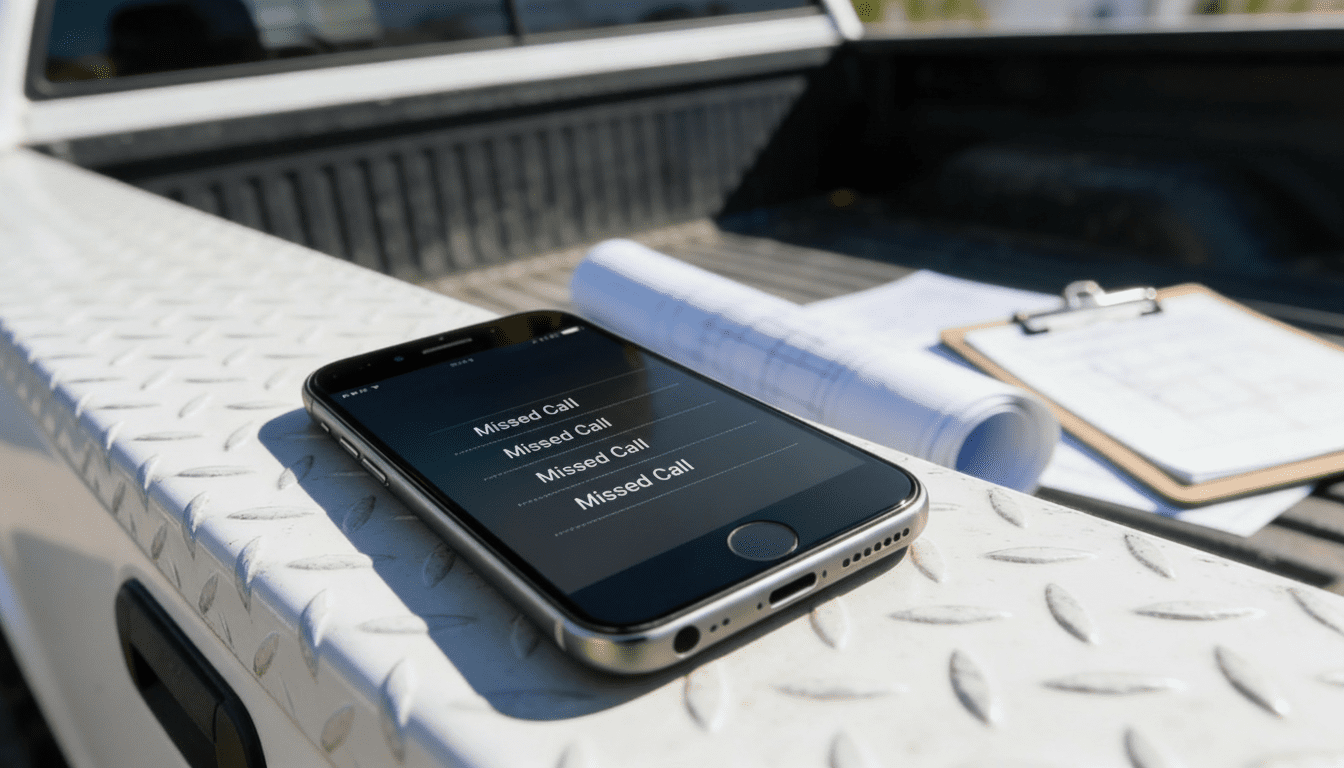
You see it all the time on your screen:
Missed call. No voicemail.
Later, when you finally get a minute, you do the right thing.
You tap the number and try to call them back.
Sometimes they answer.
A lot of the time, they don’t.
You leave a voicemail.
Maybe you try again later.
Now you’re stuck in phone tag with a ghost.
On paper, you’re “calling people back.” In real life, you’re quietly losing money.
The Surface Problem: You’re Trying, But You’re Too Late
You’re not ignoring people.
You’re just busy doing the work:
- On a roof.
- In a crawl space.
- Driving between jobs.
You miss a call.
You call back when you can.
You open with that same line:
“Sorry I missed your call earlier…”
The problem isn’t that sentence. The problem is the word “earlier.”
By the time you say it, a lot has already happened on their side.
Guess What Homeowners Do While You’re Working
Shocker, I know, but most people do not sit around waiting for you.
Here’s what they do instead:
- They google “electrician near me” or “junk removal Toronto.”
- They click on two or three companies.
- They call them one after another.
Someone picks up. Someone sounds helpful. Someone books the job.
If that someone isn’t you, it’s because:
- You were under a sink.
- Or halfway up a ladder.
- Or already with another customer.
By the time you say, “Sorry I missed your call earlier,” they’ve already moved on.
They don’t feel rude for not picking up when you call back. In their mind, the problem is already solved.
It is a real job that just went to someone else.
Here’s Why This Sentence Is So Expensive
Think about the money tied to that one missed call:
- Average job: maybe 400, 800, 1,500, or more.
- Add the review they might have left.
- Add the neighbour or family member they might have referred.
- Add any repeat work after a year or two.
All of that disappears the moment they book with someone else.
You still:
- See the missed call on your phone.
- Take time to dial back.
- Leave a voicemail.
- And think, “Leads are flaky. No one picks up the phone anymore.”
Meanwhile, your competitor answered the first time and got paid for it.
“Sorry I missed your call earlier” feels polite. But often, it’s just a nice way of saying “I’m the second guy you called.”
And the second guy rarely gets the job.
Phone Tag With Ghosts
This is what the pattern looks like:
- They call you. You can’t answer.
- You call them back. They don’t answer.
- You leave a message.
- You might try again once more.
- After that, you give up.
In your head, you’re thinking:
- “People never answer their phones.”
- “These leads are junk.”
- “Nobody is serious anymore.”
But from the homeowner’s side:
- They got through to someone else.
- That person picked up.
- They booked the job and moved on with their day.
At this point, you aren’t chasing leads. You’re chasing ghosts.
Why “I’ll Just Be Faster Calling Back” Isn’t the Fix
You’ve probably told yourself this:
- “I’ll keep my phone on me more.”
- “I’ll be quicker to call people back.”
- “I’ll stay on top of missed calls.”
But here’s the real world:
- When you’re in the middle of a job, you can’t drop everything and answer.
- When you’re driving, you shouldn’t be on the phone.
- When you’re with a customer, giving a quote, or talking face‑to‑face, that person needs your full attention.
You cannot be a full‑time receptionist and a full‑time on‑site owner at the same time.
It’s not a hustle problem. It’s a timing problem.
Most jobs are lost in those first few minutes after the first ring, long before you ever say, “Sorry I missed your call earlier.”
What It Looks Like When You Don’t Start Behind
Now picture a different setup.
You’re on a ladder at 10:13am. You miss a call. You don’t touch your phone.
But the caller gets a text right away:
“Hey, it’s [Your Name] from [Business Name].
I just missed your call. What are you looking to get done?”
They reply:
“Need someone to look at a leak in the basement. 28 Woodbine Cres.”
By the time you come down, you already know:
- Who called.
- What they need.
- That they’re still live and waiting on you.
You are not starting with:
“Sorry I missed your call earlier…”
You’re starting with:
“Got your message about the basement leak. Here’s what we can do…”
That small shift is the difference between phone tag with ghosts and real conversations that turn into jobs.
If You’re Tired of Phone Tag With People Who Never Call Back
If this feels familiar, you’re not alone.
Plenty of good contractors are:
- Missing calls because they’re on the tools.
- Calling back as soon as they can.
- Still losing the job to whoever answered first.
I put together a short “Missed Call Recovery Play” that shows:
- How to tighten things up this week, even if you keep doing it all by hand.
- Simple changes that make your call-backs land more often.
- What it looks like when the same play is run by a system, not by your memory.
Want the play?
Drop your email and I’ll send it to you right away so you can stop losing jobs before you ever speak to the customer.